Telegram Bot Monetization: 7 Ways to Earn from Your Bot in 2026
Discover the top telegram bot monetization strategies in 2026: Telegram Stars, subscriptions, affiliate programs, digital products, and B2B licensing.

TeleClaw Team
June 25, 2026
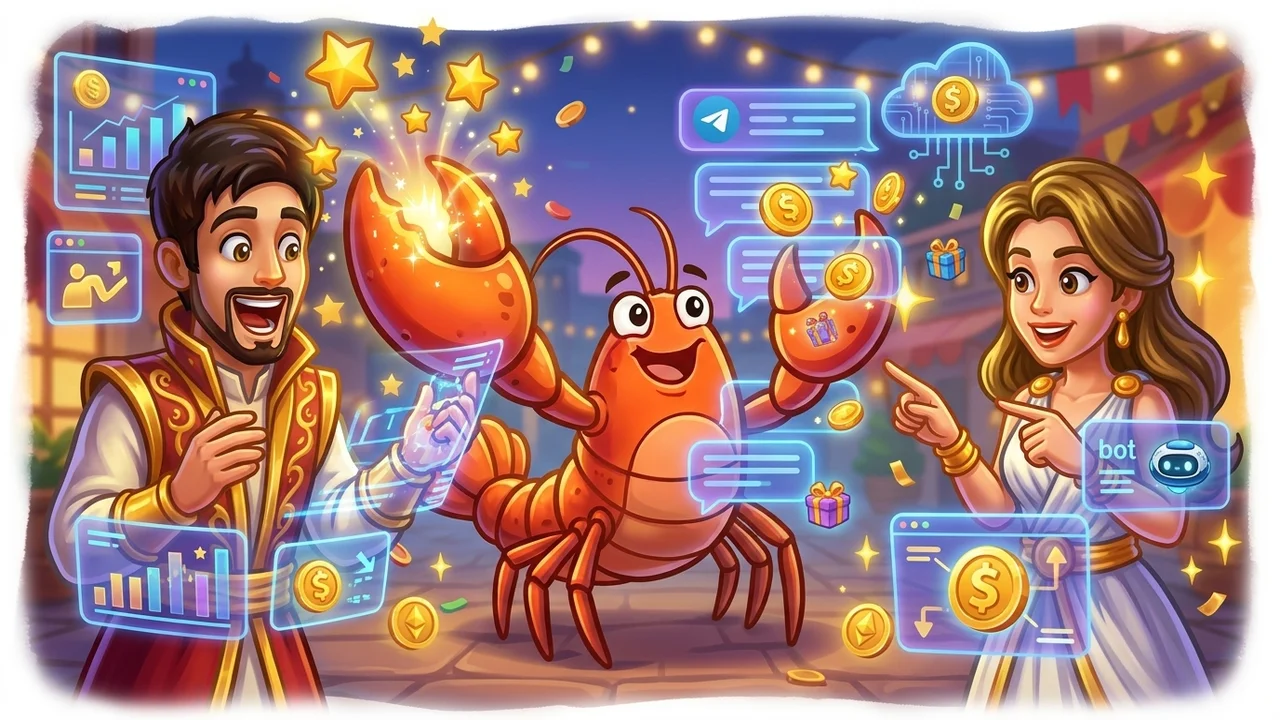
Telegram has over 950 million monthly active users, and a growing share of those users interact with bots every day. Unlike app stores, Telegram does not impose a mandatory 30% cut on most revenue channels. Unlike email, bot messages get opened within minutes. Unlike websites, there is no SEO or ad spend required to reach your existing users.
Most bot builders leave money on the table because they stop at building the bot and never add a revenue layer. This guide covers seven proven telegram bot monetization strategies for 2026, from Telegram’s native Stars currency to B2B licensing deals worth thousands per month. Whether you have 500 users or 50,000, at least one of these models fits your current situation.
Key takeaways
- Telegram Stars lets bots collect in-app payments with no external payment gateway and no redirect outside the app.
- Subscription tiers are the most predictable revenue model for utility bots with regular, returning users.
- Affiliate commissions are the fastest monetization to add to an existing bot, often without changing bot functionality at all.
- B2B licensing produces the highest per-client revenue and suits builders who want a smaller number of high-value relationships.
- No-code platforms like TeleClaw make it possible to launch a monetized AI bot without writing a single line of code.
1. Subscription Access Tiers
The most reliable telegram bot monetization model is subscription access: free users get a limited experience, paying users unlock the full feature set.
A typical structure looks like this:
- Free tier: 10 AI messages per day, basic commands, access to public content.
- Standard tier ($5 to $9/month): unlimited messages, faster response, access to premium commands.
- Pro tier ($15 to $29/month): all Standard features plus priority support, API access, or white-label use.
Telegram’s Bot Payments API supports a range of payment providers including Stripe, PayMaster, Payme, and others. Users click a Pay button inside Telegram, complete checkout in a webview, and the bot receives a successful_payment update. The whole flow stays inside the app.
With TeleClaw, credits-based billing is built in. New users get a free allocation on signup. When they run out, they purchase more credits directly inside Telegram without leaving the conversation. You configure pricing and the platform handles payment routing, access control, and usage tracking.
If you are building a subscription bot for the first time, start with a single paid tier at a price your niche clearly supports. Adding tiers later is easier than getting the first user to pay.
2. Telegram Stars: Native In-App Payments
Telegram Stars, Telegram’s virtual in-app currency, changed the economics of bot monetization when it launched in 2024. Users buy Stars directly inside the Telegram app (no external card form, no redirect) and spend them on digital goods, premium features, and channel subscriptions. The bot developer receives Stars, which can be withdrawn as Toncoin (TON).
Why Stars matter for bot builders:
- Zero friction checkout: users already have Stars or can buy them in two taps.
- No payment gateway setup: no Stripe account, no webhook, no PCI compliance work.
- Works on all platforms: iOS, Android, and desktop, all handled by Telegram’s own infrastructure.
- Granular pricing: charge 5 Stars for a single AI analysis, 50 Stars for a content pack, 200 Stars for a monthly feature unlock.
To accept Stars, send a sendInvoice request to the Bot API with provider_token set to an empty string. That flags the invoice as Stars-only. The user sees a native Telegram payment sheet, taps Pay, and the Stars transfer instantly. Your bot receives the successful_payment update and delivers the product or unlocks the feature.
Stars work especially well for one-time unlocks, per-use AI features, and low-cost digital goods where a monthly subscription feels like too much commitment.
3. Affiliate Marketing Through Your Bot
If your bot serves a defined niche, affiliate commissions are the fastest revenue stream to add. No payment integration required. No pricing decisions. No subscription management. You embed affiliate links into bot responses and earn when users convert.
High-value affiliate categories for Telegram bots:
- SaaS tools and productivity apps: recurring commissions of 20 to 30% are common.
- Hosting and VPS providers: one-time bounties typically range from $50 to $200 per signup.
- Finance and investing platforms: cost-per-acquisition rates of $50 to $300 are standard for verified users.
- AI tools and API services: growing category with competitive commission structures.
The Telegram Affiliate Program is also worth exploring for bots that promote other mini apps. When referred users spend Stars inside a mini app, you earn a percentage set by the developer, all handled natively inside Telegram’s settings.
The key to effective affiliate monetization is specificity. Three well-matched product recommendations from a relevant bot convert far better than a generic link list. A developer tools bot recommending a specific hosting provider outperforms a general “check out our partners” message by a wide margin.
Add a /recommend or /tools command that returns curated recommendations with affiliate links. Keep it genuinely useful and update it when you find better alternatives.
4. Selling Digital Products Directly
Your bot can function as a zero-friction storefront. Users interact via commands, pay with Stars or Telegram Payments, and receive the product automatically. No website. No shopping cart. No checkout page to design.
Products that sell well through Telegram bots:
- PDF guides and ebooks on topics your audience cares about.
- Prompt packs, templates, and Notion dashboards.
- Access codes for private communities, courses, or software.
- On-demand AI-generated reports (keyword analysis, business plan outlines, resume reviews).
- API keys or access tokens for your own services.
The flow is straightforward: user sends /buy, bot returns a product description with an inline Pay button, user completes Stars checkout, bot sends the file or access link automatically.
For AI-powered bots, on-demand generation is a natural product layer. A user pays 50 Stars for a tailored report, receives it in 30 seconds, and the transaction requires no human involvement. Each sale scales without additional effort on your end.
5. B2B Bot-as-a-Service
If you build bots well, you can sell the bot itself rather than running it for consumers. Two B2B models produce recurring revenue:
Custom bot development. Businesses need bots that integrate with their CRM, support tool, or internal systems. A well-scoped customer support bot runs $2,000 to $15,000 for initial development. Adding a $200 to $500 monthly maintenance retainer turns a one-time project into a recurring line item.
White-label bot licensing. Build a generic version of your bot (AI support agent, FAQ handler, appointment booking) and license it to multiple clients on a monthly basis. The core product is built once and the revenue compounds as you add clients.
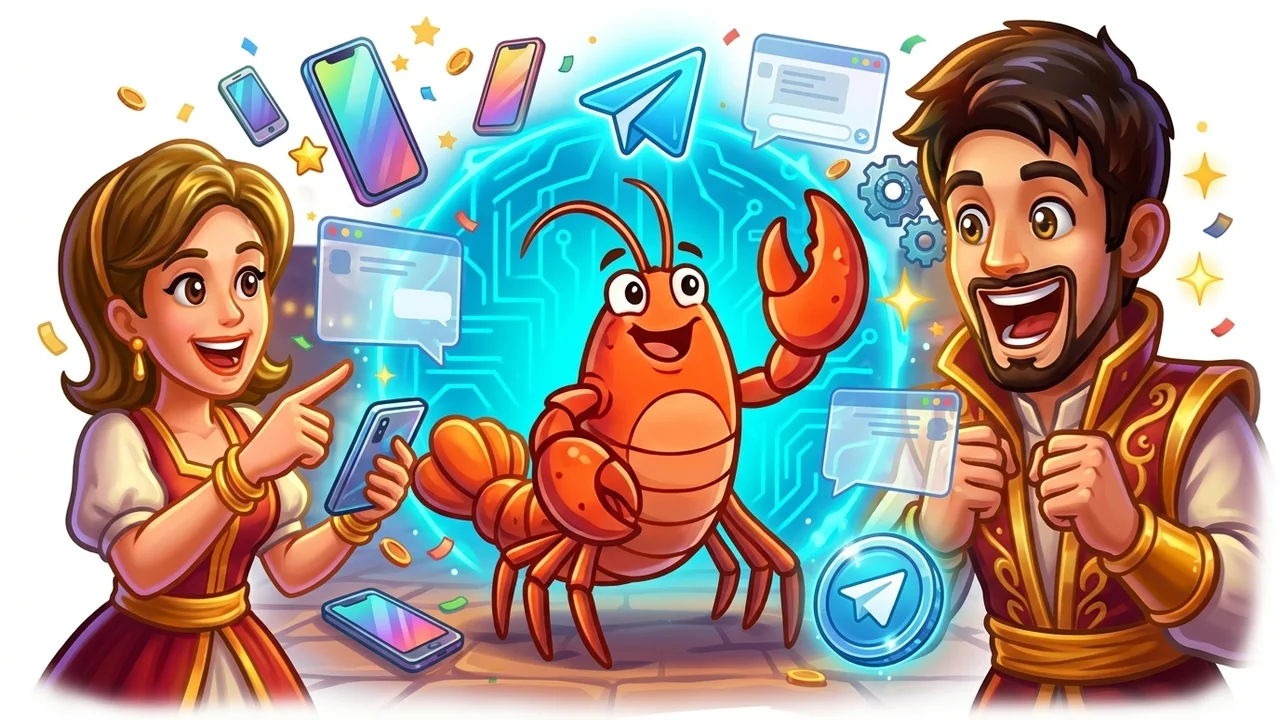
TeleClaw is built for this use case. You configure the AI knowledge base and behavior for a client, connect their Telegram group or channel, and they pay you for the ongoing service. TeleClaw handles the AI infrastructure, billing, and uptime. You handle the client relationship and margin.
B2B takes longer to close than consumer sales but the revenue is more predictable. A recurring client at $400 per month is worth more than 80 one-time $5 purchases because it renews automatically and rarely churns without notice.
If you are considering B2B, read our Telegram Bot for Business guide for the use cases clients are currently most willing to pay for.
6. Sponsored Content and Partner Integrations
A Telegram bot with an engaged audience is a media asset. Brands in your niche will pay for access to that audience through sponsored messages, co-branded features, or product integrations built into the bot.
Sponsorship formats that work in bots:
- Sponsored broadcasts: a message sent to all active users at a rate the brand negotiates with you.
- Co-branded commands: “Today’s /tip is brought to you by [Brand]” with a link.
- Native integrations: the bot actively uses or recommends a product as part of its regular function.
Pricing depends on audience size and niche. A finance bot with 10,000 active users can charge $500 to $2,000 per sponsored message. A narrower niche bot with 3,000 highly engaged users in a premium vertical might command similar rates.
To attract sponsors, build a brief media kit: monthly active users, audience profile, engagement metrics, example message format, and pricing. Keep it to one page and share it directly with tools and brands your audience already uses.
Disclose sponsorships clearly. A single line saying “This message is sponsored by [Brand]” protects your credibility and keeps users trusting your recommendations.
7. Paid Community Subscriptions
Telegram’s native paid channel subscriptions let you gate a channel or group behind a monthly Stars payment. Users subscribe directly inside Telegram. No third-party platform. No external checkout. Telegram handles renewals automatically.
This model works best when the channel delivers consistent, high-value content: curated analysis, early access to products, exclusive resources, or direct access to an expert or team.
A bot layer makes paid communities significantly more valuable:
- Welcome new subscribers automatically with onboarding content.
- Deliver exclusive content on a schedule without manual posting.
- Run interactive Q&A sessions where the bot moderates and routes questions.
- Enforce access control so non-paying users cannot post or access pinned resources.
Revenue potential at scale: 500 paying subscribers at $9.99 per month generates roughly $5,000 per month. At 2,000 subscribers it is roughly $20,000 per month from a single Telegram channel, with no platform fee beyond Telegram’s Stars cut.
The combination of a paid channel subscription and an active AI bot handling Q&A and content delivery is consistently among the highest-earning setups for Telegram-native creators.
If you are starting a bot for the first time and want to understand the setup before adding a revenue layer, our guide to creating a Telegram bot covers the technical and no-code options in full.
Choosing the Right Model for Your Bot
Not every strategy fits every bot. A practical starting point:
| Bot stage | Recommended first revenue layer |
|---|---|
| Under 500 users | Affiliate links via /recommend command |
| 500 to 2,000 users | Telegram Stars for digital goods or credits |
| 2,000 to 10,000 users | Subscription tiers or paid community access |
| Over 10,000 users | Sponsorships combined with subscriptions |
| Any size | B2B licensing if you have time to pursue business clients |
Start with the layer that requires the least infrastructure for your current user count. Add complexity only when the simpler model has proven demand.
TeleClaw Makes Monetization Faster
Building billing, access control, and AI infrastructure from scratch adds months to a bot project. TeleClaw provides all of that as a platform: credits billing, subscription management, AI response routing, and Telegram integration are included. You configure behavior and pricing through a dashboard, not code.
Open @claw on Telegram to try a live example of an AI-powered bot with credits-based billing built in.
Conclusion
Telegram bot monetization is a real and growing opportunity. Telegram has added native Stars payments, channel subscription gating, and a built-in affiliate system over the past two years, which means the infrastructure for bot revenue now exists inside the platform itself.
The seven strategies above cover the full range from immediate and low-effort (affiliate links) to higher-value and slower-to-close (B2B contracts). There is no single right answer. Pick the model that matches your current user base size and niche, validate it with your first paying users, and add additional revenue layers once the first one is working.
The tools are available. The audience is on Telegram. What remains is choosing where to start.
FAQ
Frequently Asked Questions
Can you really make money from a Telegram bot?
What is the easiest way to start monetizing a Telegram bot?
Does Telegram take a cut of bot revenue?
How much can a successful Telegram bot earn?
Do I need coding skills to monetize a Telegram bot?
More Reading
Keep Reading
Best AI Agents for Business in 2026: A Category-by-Category Guide
The clearest way to compare AI agents for business in 2026: six real categories, honest picks, and where a Telegram-native agent like TeleClaw actually fits.
TeleClaw Cloud Agents: Run a Coding Agent from Telegram
TeleClaw is listed in OpenRouter's cloud-agent category. Learn what a cloud agent does, how 2026 changed the field, and how to run one from Telegram.